

That direction reflects the wider ambition of Zámba itself. Recent FSC coverage has framed the Congress as a move from commitment to action, with a focus on scaling sustainable forest management, restoration, market confidence, and long-term delivery across Africa.
At the centre of this next phase are FSC members. Within FSC, members help shape the direction of the organisation and influence how it evolves through its governance processes. In the context of Zámba, their reflections show how structured participation can help carry continental ambition beyond the Congress and into practice.
Prudence Galega FSC Member | Cameroon
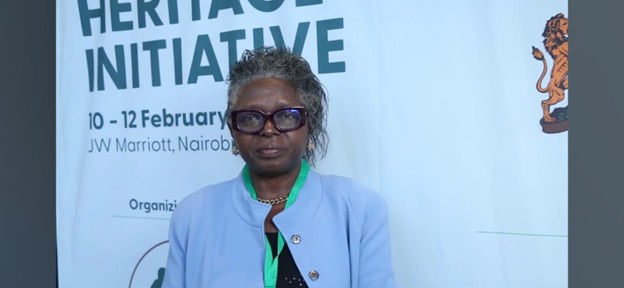
Prudence Galega brings a legal and governance perspective shaped by public service and environmental law leadership in Cameroon. Her contribution at Zámba focused on the policy conditions required to strengthen Africa’s forest sector and ensure that growth is both responsible and inclusive.
“Zámba is aimed at bringing about policy shifts to support African countries in boosting investment in the forest sector, promoting trade, and ensuring communities receive a fair share of forest benefits.”
Her reflection highlights a core governance challenge: aligning public policy frameworks with responsible private-sector participation while safeguarding community interests. Through FSC membership, she points to the importance of structured dialogue between governments, markets, and wider stakeholders in building a more balanced and effective forest governance model.
Michal Brink FSC Member | CEO, CMO Group
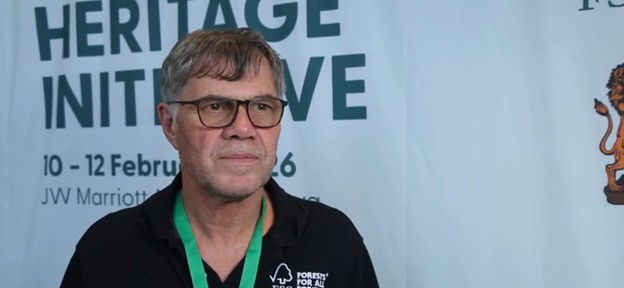
With extensive experience in certification systems and compliance management, Michal Brink views forest transformation through the lens of scale. For him, Zámba signals a more ambitious phase for sustainable forest management across the continent.
“Zámba is taking FSC into uncharted waters – scaling certification far beyond anything that has been done on this continent before.” He also expresses a clear forward-looking commitment: “We commit to certifying hundreds of thousands of smallholders across Africa within the next five years.”
Together, these reflections point to a wider shift: from isolated certification efforts to the more systematic inclusion of smallholders within credible, traceable, and internationally recognized supply chains.
Dr. Jocelyn Djamano FSC Member | University of Kinshasa, Democratic Republic of Congo
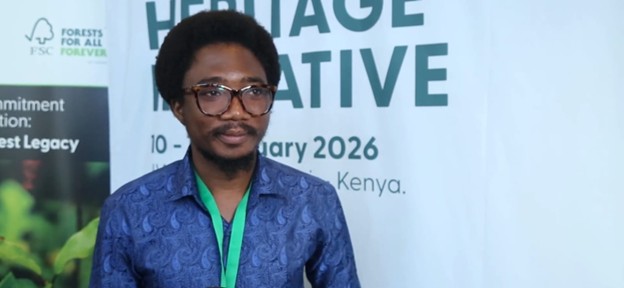
As a scientist and lecturer in public economics and sustainable development at the University of Kinshasa, Dr. Djamano brings an institutional perspective to the significance of Zámba. “This initiative mobilises African governments to strengthen forest governance mechanisms and restore degraded forest landscapes.” He also highlights a defining feature of FSC: “Members determine the direction of FSC. Through the General Assembly, they shape how the organisation evolves and operates.” For Dr. Djamano, this participatory dimension is essential. It helps ensure that forest governance and standard-setting remain grounded in lived realities, including the perspectives of Indigenous Peoples and local communities. Within FSC, inclusive representation is not peripheral to legitimacy; it is one of its foundations.
From alignment to implementation
Zámba has now moved into its implementation phase. Its long-term significance will be shaped not only by the commitments expressed in Nairobi, but by the ability of institutions, partners, and FSC members to translate that momentum into action across policy, certification, and landscape-level delivery. Recent FSC reporting on the Congress has emphasized that this next phase is about operational follow-through, partnerships, and measurable outcomes.
The reflections shared by FSC members point to exactly that transition. They speak to policy reform, certification at scale, and governance participation as interlinked parts of Africa’s forest future. More than a moment of alignment, Zámba has opened a space for delivery. What comes next will depend on how effectively that shared ambition is carried forward.